






FORT LAUDERDALE
Where
Fort Lauderdale beaches include a canine beach; numerous beach parks; and the paved Fort Lauderdale Beachfront Promenade, stretching alongside the Atlantic for two miles, bordered by its iconic white wave wall. Fort Lauderdale Beach Park, located at 1100 Seabreeze Blvd, Fort Lauderdale, Fla., 33316, provides one of the most popular options for a day of surf and sand.
Vibe
Scenic, relaxed, vibrant. Situated less than a mile south of legendary Las Olas Boulevard, Fort Lauderdale Beach Park embodies a lively yet laid-back coastal atmosphere. Here, beachgoers bask in the sun, build sandcastles and swim, while surfers catch waves along the shoreline. Joggers, bikers, and rollerbladers traverse the paved promenade, while in the Park, beach volleyball, picnics under the palms, and luxury yachts sailing on the horizon create an idyllic scene.
See, feel
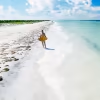
An abundance of palms, a latte-hued beach nestled next to azure waters, and top-notch amenities make Fort Lauderdale Beach Park easy to love. It boasts lifeguards, a wealth of activities both on the beach and onshore, and neighboring luxury hotels such as the W Fort Lauderdale, The Ritz-Carlton, Fort Lauderdale and Conrad Fort Lauderdale Beach, and many more places to stay. Expect some waves, which will vary depending on tides, winds and offshore systems. If you want to see what you’re missing, check out this slide show of Fort Lauderdale Beach Park. And know about the LOOP comprising four unique greenspaces on Fort Lauderdale Beach.
On or near the beach
You’re invited to take a swim, catch some rays, or play a game of beach volleyball at the Park-- but that’s just the tip of the sandbar. You can bring your board and surf, or take a lesson with Hang Loose Surf School. Nearby, Beach Ventures for SEABOB delivers an adventure where you’ll glide under and through the water towed by an underwater jet ski; Sunrise Paddleboards offers kayaks and paddleboards; and SUP PUP promises tours and yoga on stand-up paddleboards. Want more? Check out Bonnet House Museum & Gardens, Water Taxi, Jungle Queen, and Marina Village and The Shorely.
Accessibility
Fort Lauderdale Beach Park features accessible parking, picnic tables and grills, restrooms, and showers. A beach wheelchair is available at the Sebastian Street lifeguard tower. Here’s more information about area and beach accessibility.
Facilities
The Park offers amenities that include basketball, a non-motorized boat ramp, grills, outdoor showers, picnic tables, a playground, restrooms and a volleyball court.
Vendors along the beach like Aloha Watersports rent everything from beach toys to chairs and umbrellas.
Lifeguards
Yes, year round. Here’s more information about lifeguards and ocean safety. And, here's info about beach rules and regulations.
Parking
Here’s information about parking at Fort Lauderdale Beach Park from Parkopedia. It has 438 spots, including disabled spots, no height restrictions, and electric car charging. Arrive early on weekends and holidays.
FREQUENTLY ASKED QUESTIONS ABOUT FORT LAUDERDALE BEACH
Q. Where is Fort Lauderdale Beach?
A. In Broward County, along State Road A1A on the Atlantic, about three miles east of downtown Fort Lauderdale. Las Olas Boulevard runs from downtown out to the sand and meets A1A at the beach's busiest corner.
The stretch people mean by "Fort Lauderdale Beach" runs north from there along Fort Lauderdale Beach Boulevard. Lauderdale-by-the-Sea and Pompano Beach are separate towns further north, with their own rules and their own lifeguards.
Q. Are there lifeguards?
A. Yes. Fort Lauderdale Ocean Rescue staffs 20 towers along the shoreline, and lifeguards are on duty every day of the year, holidays included. The towers carry backboards, oxygen and defibrillators as well as rescue boards.
The guarded stretch runs from Fort Lauderdale Beach Park north to Northeast 18th Street. Sand outside that stretch is unguarded, and so is the whole beach outside staffed hours. The city's advice is the simple one: swim near a lifeguard.
Q. How do I check conditions before I swim?
A. The city posts current conditions on its beach conditions page, and there's a hotline updated daily at 954-828-4597.
On the sand, read the beach warning flags flying from the towers. Fort Lauderdale follows Florida's Beach Warning Flag Program: green is low hazard, which is not the same as risk free; yellow is medium hazard with moderate surf or currents; red is high hazard; two red flags mean the water/and or beach is closed; and purple means dangerous marine life has been reported, which can fly alongside any other color.
Q. What is the water like?
A. Atlantic beaches tend to have more waves than the Gulf. Conditions change daily, and rip currents can occur even when the ocean appears calm. This coast produces enough of them that lifeguards here run large numbers of rescues on red flag days.
If you're caught in a rip current, swim parallel to shore until the pull releases rather than fighting straight back toward the sand, and raise an arm to signal a lifeguard. Call 911 in an emergency. Jellyfish and Portuguese man o' war can arrive with onshore winds. If you're stung, rinse with seawater rather than fresh water, and call 911 if the reaction is serious.
Q. Where do I park?
A. City lots, garages and metered street spaces along and behind A1A. There's a beach lot at 725 N. Fort Lauderdale Beach Blvd., and the public garages are usually the better bet on a busy day.
Rates differ between lots, garages and street meters, and residents can buy an annual beach parking permit at a reduced rate. Current rates and a map of every city option are on the public parking locations page. Parking on the beach is paid, so budget for it rather than circling for a free space.
Q. What is the beachfront promenade?
A. The wide brick walkway that runs along A1A behind the low white wave wall, which is the image most people picture when they think of this beach. It's flat, continuous and lit, and it's the easiest way to move along the beachfront on foot.
Restaurants, bars and hotels line the far side of A1A, so you can walk the promenade and cross to eat without moving your car. Hugh Taylor Birch State Park backs onto the north end if you want shade and trails.
Q. Is the beach accessible?
A. Sebastian Street and A1A have an accessible telephone and showers. Fort Lauderdale Beach Park has accessible restrooms, parking, picnic tables and grills, showers, and telephone available.
A beach wheelchair is available from 10 a.m. to 4:30 p.m. at the Sebastian Street lifeguard station. Call Ocean Rescue at 954-828-4595 to arrange it, and note there is accessible parking at 3031 Sebastian St.
Because the supply is limited rather than a fleet, calling ahead matters more here than at beaches with several chairs. The promenade itself is flat and hard-surfaced, which makes the beachfront easy to move along even without going onto the sand. The city keeps an accessibility page for its parks.
Q. Can I bring my dog?
A. Only to Canine Beach. Dogs are not allowed on the rest of Fort Lauderdale Beach.
Canine Beach runs from lifeguard tower 16 to a point 100 yards north of Sunrise Boulevard, in the posted section. It's open 6–9 a.m. and 5–7 p.m. . There’s a maximum of three dogs per handler, all dogs need current vaccination and a license, and puppies under four months aren't allowed. Details are on the city's dog-friendly places page.
Q. What are the beach rules?
A. No alcohol and no glass containers on the beach. Fires, fireworks and camping are prohibited. Sleeping on the beach isn't allowed.
There are designated areas for surfing. The full list is on the city's beach rules and regulations page.
Q. When is the best time to visit?
A. Winter works here, which is why it's the busy season. Ocean temperatures off Broward County sit in the low to mid-70s in January and February, and the air is mild and dry, so swimming stays realistic through the cool months.
Summer is hot and humid with afternoon thunderstorms that usually pass through quickly, and the ocean is at its warmest. March brings spring break crowds to this beach in particular, though not every day or every stretch of sand will be crowded, and the quieter blocks are north of the Las Olas corner.
Q. What about sea turtles?
A. Nesting season in Broward County runs March 1 through Oct. 31. The Broward County Sea Turtle Conservation Program, run by Nova Southeastern University under contract to the county, surveys more than 24 miles of county beach every day through the season.
Stay clear of marked nests. Disturbing one is illegal under state and federal law. Don't use flashlights, flash photography or video lights near nesting turtles or hatchlings.. Fill in holes and knock down sandcastles before you go, and take chairs, umbrellas and tents off the sand overnight.
Lighting matters on a beachfront this developed. The rule is not simply that lights go off. Fort Lauderdale, like Broward's other coastal cities, has a beachfront lighting ordinance, and the standard is that artificial light must not be visible from the beach during the season, with shielded, turtle-friendly fixtures permitted. The program's guidance for beachgoers and residents covers both. Someone disturbing a turtle or nest can be reported to the FWC Wildlife Alert Hotline at 888-404-3922; for a dead, sick or injured sea turtle or hatchling in Broward County, call the Broward County Sea Turtle Emergency Response Line at 954-328-0580.
More Great Beaches in Southeast Florida
Fort Zachary Taylor State Park
John Pennekamp Coral Reef State Park


