






JUNO BEACH
Where
Juno Beach encompasses Loggerhead Park, a major sea turtle nesting beach that’s home to Loggerhead Marinelife Center, and Juno Beach Park, sited at 14775 U.S. Highway 1, Juno Beach, Florida 33408.
Vibe
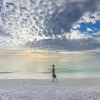
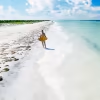
Laid-back, tail wagging fun on a serene beach with a pier. Bring your friends—and your best friend—to Juno Beach Park, an off-leash, dog-friendly beach with pristine blue waters and a pier that’s perfect for fishing and watching the sunrise over the surf. Here, you’re likely to see treasure seekers hunting for seashells; surfers catching a ride on the most consistent wave in the north end of Palm Beach County; and fishermen with lines dangling off the pier. This relaxed stretch of sand is bordered by Juno Dunes Natural Area, where you can discover loop trails and climb atop an ancient sand dune for epic views of the wetlands and scrub forest.
See, feel
A smidge over five acres with 300 feet of guarded beach, Juno Beach Park is centered around a pier that reaches 990 feet over the Atlantic. It welcomes visitors with free parking, a playground of waves, and designated fishing and surfing areas. Palms, dunes lush with seagrapes, and sand that’s a delicious hue of hot chocolate and dotted with shells make it easy on the eyes. Juno’s kiteboarding beach is just north of the pier, and often, adventurers with colorful, billowing sails race across the water.
Garnering high marks for its cleanliness and less-crowded shores, Juno promises a fine beach day for families and everyone else who needs a dose of salt air and vitamin D. Expect some waves, which will vary according to winds, tides and offshore systems.
On or near the beach
Picnicking, working on the perfect tan, fishing and surfing are popular, as is searching for seashells. Although Juno Beach is not as renowned for shell collecting as Sanibel, Florida, a beachcomber stumbled upon a perfectly preserved Junonia snail shell—one of the world's rarest shells—along its shores.
Nearby, you can take a surf lesson, go kiteboarding or take a kiteboarding lesson, and discover eateries serving up a variety of cuisines.
Accessibility
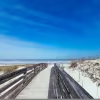
The Juno Beach Pier is wheelchair accessible. Here’s information about the most accessible Palm Beach County beaches.
Facilities
The park’s amenities include restrooms, outdoor showers and a picnic area. The Juno Beach Pier is complete with a friendly guest services team, a snack bar, and a gift store, and offers fishing tackle, rental poles and bait.
Lifeguards
Yes
Parking
Abundant, free parking
FREQUENTLY ASKED QUESTIONS ABOUT JUNO BEACH
Q. Where is Juno Beach located, and how do I get there?
A. Juno Beach is on Florida's southeast Atlantic Coast, about four miles south of Jupiter along U.S. Highway 1 in northern Palm Beach County.
Juno Beach Park, the main beach access,is located at 14775 U.S. Highway 1, Juno Beach, FL 33408, roughly 17 miles north of downtown West Palm Beach.
Q. Why is Juno Beach considered one of Florida's most important sea turtle beaches?
A. Juno Beach is one of the most active loggerhead sea turtle nesting sites in the world; during peak season, thousands of nests are documented along this short stretch of Atlantic shoreline each year.
The Loggerhead Marinelife Center, located at 14200 U.S. Highway 1 inside Loggerhead Park, leads the research and conservation effort. The center is free to enter and runs aquariums, sea turtle rehabilitation tanks, and marine science exhibits open to the public.
Call the center at 561-627-8280 for current program schedules.
Q. What amenities are available at Juno Beach?
A. The beach park includes 300 feet of guarded swimming beach, outdoor showers, restrooms, a picnic area and bicycle trails.
The 990-foot fishing pier features shade structures, fish cleaning tables, a bait shop and a food concession.
Full facility details are on the park and pier listing managed by Palm Beach County Parks and Recreation.
Q. What are the hours at Juno Beach Park, and is parking free?
A. Parking at Juno Beach Park is free. Winter hours (November through February) run Sunday through Thursday 6 a.m. to 10 p.m. and Friday through Saturday 6 a.m. to midnight; summer hours extend later and can vary.
Call the park at 561-799-0185 to confirm current hours before your visit, especially outside the winter schedule.
For same-day beach and ocean conditions, the county's Ocean Rescue line is 561-694-7480.
Q. What are the water conditions like at Juno Beach?
A. Juno Beach faces the Atlantic Ocean, so plan for moderate Atlantic conditions: wave height, current and temperature all shift with wind, tides and offshore weather systems.
Lifeguards are on duty at the guarded beach section; always check the warning flags before entering the water.
For current conditions, call the daily beach conditions line at 561-624-0065.
Q. Is there a fishing pier at Juno Beach?
A. Yes, the Juno Beach Pier stretches 990 feet into the Atlantic and is managed by the Loggerhead Marinelife Center. It has a bait shop, snack bar and gift store on-site.
For pier status, check out the Juno Beach Pier’s Facebook page. Or, call 561-855-6185 or check the Loggerhead Marinelife Center website for updates.
Q. Can I watch sea turtles nest at Juno Beach?
A. Loggerhead, leatherback and green sea turtles nest on Juno Beach from roughly May through October, with peak activity in June and July after dark. During peak season, multiple turtles may come ashore on the same night along this stretch.
Florida law prohibits approaching, disturbing or shining lights on nesting turtles. If you're on the beach at night during nesting season, stay well back from any turtle you see and avoid using flashlights.
The Town of Juno Beach's Loggerhead Marinelife Center page has contact details if you want to learn about current educational programs. The center is free and open Monday through Saturday 10 a.m. to 5 p.m. and Sunday 11 a.m. to 5 p.m.
Q. Is there a kiteboarding area at Juno Beach?
A. Yes. A designated kiteboarding zone sits north of the pier, making Juno Beach one of the few Palm Beach County beaches with a marked launch area for kiteboarders.
Atlantic winds along this coast are most reliable in winter and spring, when northeast trades push through consistently.
Swimmers should stay within the guarded beach section south of the pier and out of the kiteboarding corridor.
Q. Is there a natural area near Juno Beach worth exploring?
A. Juno Dunes Natural Area begins immediately adjacent to the beach park at 14501 U.S. Highway 1. The 569-acre preserve spans from the Atlantic to the Intracoastal Waterway with oceanfront dune viewing, miles of trails in the west tract and floating dock access for kayakers and boaters.
The elevated sand dune areas on the ocean side are among the few intact coastal scrub habitats remaining in Palm Beach County, and shorebirds are common year-round.
Visitor details are on the Juno Dunes Natural Area page on the Town of Juno Beach website.
Q. Is Juno Beach good for families with kids?
A. Juno Beach works well for families, especially those with older kids who are interested in marine life. The Loggerhead Marinelife Center is free, takes about an hour, and has live sea turtles in rehabilitation tanks that hold kids' attention well.
The guarded beach section is compact at 300 feet, which makes it easy to keep an eye on younger swimmers.Atlantic surf is typically moderate but can become rough depending on weather and tides, so stay near the lifeguard station.
The beach park sees lighter weekday traffic than larger regional beaches, which helps on a family visit.
Q. When is the best time to visit Juno Beach?
A. Fall and winter (October through February) offer pleasant weather, lighter crowds and reliable wind for kiteboarding. The beach is never as congested as South Florida's more urban options.
If sea turtle nesting is the draw, plan a visit in June or July when nesting activity is at its peak and the Loggerhead Marinelife Center's programs are most active.
Summer afternoons can bring brief Atlantic storms; morning visits tend to give you the calmest conditions and clearest water.
Q. Is Juno Beach accessible for visitors with disabilities?
A. The Juno Beach Pier is described as wheelchair accessible, though visitors should confirm access during the ongoing refurbishment. If you are near the Loggerhead Marinelife Center (just south of the main park), beach wheelchairs can be borrowed there, though they recommend calling at least 24 hours in advance.


