





FORT JEFFERSON, DRY TORTUGAS
Where
Dry Tortugas National Park is a remote island sited almost 70 miles (113 km) west of Key West. You can’t drive to the island; the only way to get here is via boat or seaplane. Ferry and seaplane services (or a private boat) will bring you to Garden Key. Here’s information on how to explore other areas of the park. Here’s a Dry Tortugas National Park map.
Vibe
Beyond-remote tropical island with blow-your-mind snorkeling centered around a 19th Century Fort. Prepared to be awed: Dry Tortugas is an escape in the truest sense of the word, renowned globally for stunning Fort Jefferson, gin-clear waters, exceptional coral reefs, diverse marine life, and abundance of bird species.
See, feel
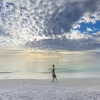
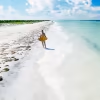
When you first see Garden Key, whether from the air or the ferry, it’s impossible to pull your eyes away. Fort Jefferson, a formidable, red brick fortress with a striking hexagonal shape, rises from the Gulf waters, dominating the island. The unbelievably clear waters surrounding it are a bewitching emerald-hue, with reefs noticeably visible from the surface. You’re likely to see planes docked on the brilliant white sand—a dreamy scene out of a movie—and snorkelers exploring.
The swim areas on Garden Key are accessible via North, South, and East Beach, with beaches that offer a gradual slope and easy entry, perfect for beginner swimmers and snorkelers.
On or near the beach
Swimming and snorkeling are must-dos. Due to its secluded location and the gulf current, the park promises more marine life and often, much larger versions of it, than anywhere else in the Florida Keys. On a snorkeling expedition, expect to see boldly-patterned tropical fish and a vibrant, living coral beneath a mere four to seven feet of water, directly off the beach.
Explore Fort Jefferson to take a stroll through the past—one that’s boiling with strife, sorrow and bold personalities.
Other activities include birdwatching and fishing, both exceptional, as well as camping.
Accessibility
The Yankee Freedom Ferry has lifts at the dock, one accessible bathroom and is ADA compliant. Fort Jefferson is accessible only on its first tier. Here’s more accessibility information.
Facilities
Garden Key is home to the park headquarters, a visitor center, picnic tables, and campgrounds. No public restrooms are available at the park, but you can use the facilities provided onboard the Yankee Freedom. Composting toilets are available for visitors to use within the campground and after 2:30 p.m.
There are no restaurants, shops, or any other services that offer food, water or fuel on the island. The ferry provides breakfast and lunch for its passengers. Check out the answers to frequently asked questions from Dry Tortugas National Park.
Lifeguards
No lifeguards are on duty. Swim at your own risk.
Parking
Not applicable.
FREQUENTLY ASKED QUESTIONS ABOUT DRY TORTUGAS NATIONAL PARK
Q. Where is Dry Tortugas National Park located?
A. Dry Tortugas National Park sits on a cluster of islands in the Gulf, about 70 miles west of Key West.
Garden Key is the main visitor island, home to Fort Jefferson and the beach and snorkeling areas most people come to see.
There are no roads to the park and no bridge: access is exclusively by ferry, seaplane or private boat from Key West.
Q. How do you get to Dry Tortugas National Park?
A. The three options are the Yankee Freedom ferry from Key West; a seaplane charter, also departing from Key West; or a private boat.
The Yankee Freedom is the main route for most visitors: campers check in at 6 a.m., day-trippers at 7 a.m., with departure at 8 a.m. and return to Key West around 5:30 p.m.
Seaplane charters offer a shorter flight time (about 40 minutes each way) and are especially popular for visitors who want to see the reef structure from the air before landing at the island.
Book tickets for your trip well in advance through the Dry Tortugas Ferry Site; day-trip capacity is limited and summer and holiday slots fill months out. Camping reservations are made with the ferry only if you're using it for transportation, but camping itself is first-come, first-served once transportation is secured.
Q. What does the Yankee Freedom day trip include and what does it cost?
A. Here’s where you can check out prices for Yankee Freedom day-trip tickets.
The fare includes round-trip transport, park entrance, breakfast on the way out, lunch on the return, snorkeling gear for the day and a guided tour of Fort Jefferson.
You have roughly four hours on the island during a day trip, which is enough time to snorkel, tour the fort and walk the beach. Always check their website for up-to-date information.
Q. What is Fort Jefferson?
A. Fort Jefferson is a massive 19th-century hexagonal masonry fort that covers most of Garden Key, making it one of the largest brick structures in the Western Hemisphere.
Construction began in 1846 and was never fully completed; the fort was used as a Union military prison during the Civil War and is best known as the place where Dr. Samuel Mudd was imprisoned after being convicted for his role in the Lincoln assassination plot.
Today visitors can walk the accessible first tier of the fort, which looks out over the parade grounds, the surrounding moat and the open Gulf.
The combination of 16 million bricks rising from a turquoise island in the middle of open water makes the fort one of the most unusual sights in the national park system.
Q. What is the snorkeling like at Dry Tortugas National Park?
A. Snorkeling at Dry Tortugas consistently ranks among the best in Florida, with gin-clear water, living coral and fish populations that rival and often exceed what you'd find in the more visited parts of the Florida Keys.
The reef is accessible right off the beach in shallow water (roughly four to 15 feet), so you don't need a boat or dive certification to reach it.
Snorkeling gear is included with Yankee Freedom day-trip tickets; visitors arriving by private boat should bring their own.
Q. What are the water conditions at Dry Tortugas?
A. Garden Key is surrounded by the Gulf waters, generally calm and exceptionally clear, with visibility that often exceeds 30 feet and frequently reaches 50–80 feet – or even more--under ideal conditions.
The swim areas on Garden Key are accessible via North, South, and East Beach, with beaches that offer a gradual slope and easy entry, perfect for beginner swimmers and snorkelers.
Conditions can change quickly in open water; check the National Weather Service marine forecast before heading out, especially if you're arriving by private vessel.
Q. Can you camp overnight at Dry Tortugas?
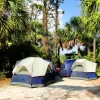
A. Yes, Garden Key has eight primitive campsites, each accommodating up to six people, at roughly $15 per night payable on arrival, first come, first served. The park also offers a group site for 10-20 people that must be reserved in advance. Camping is entirely self-sufficient: you must bring all water, food, fuel and supplies, as there is nothing available for purchase on the island.
Camping reservations on the Yankee Freedom fill nine to 12 months in advance; book as early as possible through the Dry Tortugas reservation site and plan for your ferry ticket cost on top of the camping fee.
Q. What should you bring to Dry Tortugas?
A. For day trips, the ferry provides breakfast and lunch, snorkel gear, a life jacket; bring water, a hat, sunscreen and sunglasses because shade on the island is minimal.
For campers, bring everything: drinking water (at least one gallon per person per day), all food, cooking fuel, a tent, a sleeping bag and every supply you'd need for a remote backcountry trip, because there are no stores, restaurants or fresh water sources on the island.
Composting toilets at the campground are available from 2:30 p.m. onward; day-use restroom access is more limited, so plan accordingly.
Q. Is Dry Tortugas good for families?
A. Yes, with some planning: the shallow snorkeling, historic fort and white sand beach are genuinely engaging for kids of most ages, and the Yankee Freedom ferry staff guide families through the experience on arrival.
The full round trip is a long day (roughly 9 to 10 hours including transit), and kids who get seasick on open water may struggle with the 2.5-hour ferry crossing each way.
The seaplane option significantly cuts transit time if the ferry is too much for younger travelers.
Q. When is the best time to visit Dry Tortugas?
A. January through May offers the most reliable weather, calmest Gulf conditions and best underwater visibility, making it the preferred window for serious snorkelers and photographers.
May also coincides with the beginning of nesting season for sooty and noddy terns, which use Bush Key (adjacent to Garden Key) as a major nesting colony, so birders should plan around that window.
Summer brings heat, afternoon storms and higher humidity, and the hurricane season (June through November) introduces weather risk on the open-water ferry crossing; check conditions carefully if traveling in fall.
Q. What wildlife can you see at Dry Tortugas?
A. The waters hold an exceptional density of marine life: nurse sharks, sea turtles, rays, lobster and hundreds of reef fish species are commonly spotted just off the beach.
Above water, the park is equally rich for birders: Dry Tortugas sits on a major migratory route and hosts one of the largest sooty tern nesting colonies in North America, with tens of thousands of birds on Bush Key from spring through summer.
The sheer remoteness of the location keeps wildlife interactions here more natural and less habituated than at mainland parks, which is a meaningful part of what makes a visit here different from anything else in the Florida Keys.


