








DAYTONA BEACH
Where
While Daytona Beach has 26 beach access points and numerous parks, the center of the action is Breakers Oceanfront Park, located at 13 S Atlantic Ave, Daytona Beach, FL 32118, just south of the iconic Daytona Beach Main Street Pier.
Vibe
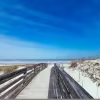
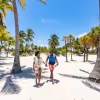
Dubbed the “World’s Most Famous Beach” by the 1920s, Daytona Beach still has an air of excitement surrounding it, with a hint of a carnival atmosphere. Breakers Park is bordered by great shops, eateries and attractions, and a handy walkway connects it to the Daytona Beach Boardwalk. It’s busy and popular with families, couples and groups of friends.
See, feel
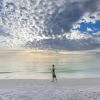
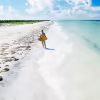
Daytona’s smooth, hard-packed sand and wide beach are legends in their own right, with a history of car racing on the beach that began in 1936. Breakers doesn’t offer driving on the beach, but today, that same sand – a shimmering, creamy brown with streaks of cinnamon– offers an ideal surface for a stroll by the waves. At Breakers, expect a large splash pool centered around a fountain, plenty of palms, stunning ocean views, and a backdrop of a bustling cityscape.
Anticipate some surf, which will vary depending on tides, the wind, and offshore systems.
On or near the beach
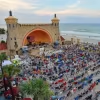
Kick back on the sand, take a surfing lesson, or swim. Visit Daytona Beach Main Street Pier for fishing or to grab a bite at Joe’s Crab Shack. And make sure to check out what’s happening at the Oceanfront Bandshell.
Accessibility
Breakers Oceanfront Park boasts handicapped beach and pier access. Accessible parking and restrooms are on site. Free beach wheelchairs are available on a first-come, first serve basis at other area locations, but not here.While Breaker’s doesn’t offer beach driving, this PDF map has locations where you can drive on the beach, as well as other parks with handicap access. Handicap vehicles get free access to the beach.
Facilities
Only 2.5 acres, Breaker’s Oceanfront Park is packed with amenities, which include a multipurpose field, splash fountain, sand volleyball court, walking paths, restrooms, water fountains, and an Environmental Learning Center. Ocean Walk Beach Services offers rentals of all sorts. The Volusia County Florida Beaches app provides real-time information on beach parks, lifeguard stations, drive-on ramps, access points, restrooms and park features.
Lifeguards
Volusia County Beach Safety covers more than 40 miles of county beach, including this stretch, with staffing that expands over the summer. Here’s a map that includes lifeguard stations.
Parking
Breaker’s offers off-beach parking and valet parking. Here’s more parking information and other parking options. Here’s a map of beach access points and areas where you can drive and park on the beach.
FREQUENTLY ASKED QUESTIONS ABOUT BREAKERS OCEANFRONT PARK
Q. Where is Breakers Oceanfront Park?
A. At 13 S. Atlantic Ave. in Daytona Beach, Volusia County, just south of the Main Street Pier. Breakers Oceanfront Park is a City of Daytona Beach park sitting directly on the beachfront.
It's compact, about 2.5 acres, and if you want somewhere with restrooms, showers and shade before and after your time on the beach, this is the spot.
Q. What's in the park?
A. There's a splash fountain, a sand volleyball court, a multipurpose field, walking paths, restrooms, water fountains, outdoor showers, bicycle racks and an Environmental Learning Center.
The park itself is open dawn to dusk. The restrooms, splash pad, and Learning Center keep shorter hours, so don't count on them early or late in the day.
Q. Are there lifeguards?
A. Yes. Volusia County Beach Safety covers more than 40 miles of county beach, including this stretch, with staffing that expands over the summer.
Coverage is not uniform along the whole 40 miles or through the whole year, so look for a staffed tower rather than assuming one is nearby, and swim near it. Outside staffed hours the beach is unguarded.
Q. What is the water like?
A. This is a surf coast. Atlantic beaches tend to have more waves than the Gulf, and Daytona's water is rarely glassy. Conditions change daily, and rip currents can occur even when the ocean appears calm.
Check the beach warning flags and the lifeguards' guidance before going in. If you're caught in a rip current, swim parallel to shore until the pull releases rather than fighting straight back in, and raise an arm to signal a guard. Call 911 in an emergency.
If you're stung by a jellyfish, rinse the area with seawater, carefully remove any visible tentacles with tweezers, and immerse the affected skin in hot water (not scalding) for 20 to 45 minutes to relieve pain. Avoid rubbing the area or rinsing with fresh water. Seek medical attention for severe or worsening symptoms, and call 911 for difficulty breathing, chest pain or other signs of a serious reaction.
Q. Can I drive on the beach here?
A. In designated areas, yes. Volusia County allows beach driving and parking in marked sections, seaward of the conservation markers, and normal traffic rules apply on the beach.
Beach driving costs $30 per day or $150 for an annual visitor pass. Parking in county-operated off-beach lots costs $20 per day or $100 annually. Volusia County residents can receive free beach-driving and county off-beach parking privileges after registering with ParkVolusia. However, Breakers Oceanfront Park and Breakers Lot are operated by the City of Daytona Beach and are not covered by ParkVolusia passes or resident exemptions. Separate municipal parking rules and fees apply.
Q. Where do I park?
A. The park has metered off-beach parking on site.
County ParkVolusia passes do not apply to this municipal parking area. Visitors who prefer parking on the beach must enter through an open, designated beach-driving ramp and pay the applicable county driving fee unless they qualify for an exemption.
Q. Is the park accessible?
A. The park has accessible beach and pier access. Accessible parking and restrooms are on site. Free beach wheelchairs are available on a first-come, first serve basis at other area locations, but not here.
Q. Can I bring my dog?
A. Dogs are prohibited on this stretch of beach except for service animals as defined by the Americans with Disabilities Act.
They are welcome, leashed, at several county parks, and there are designated dog-friendly zones within Daytona Beach and Ormond Beach. The county sets out where on its dogs on the beach page, which is the page to check before you travel with one.
Q. What else is nearby?
A. The Main Street Pier is immediately north, and the Daytona Beach Boardwalk with its arcade and rides sits just beyond it. That concentration is why this end of the beach is the busiest.
The Environmental Learning Center in the park offers free educational activities and programs about the coastal environment, including marine life and birds. It's open Monday through Friday from 9 a.m. to 3 p.m.
Q. When is the best time to visit?
A. Spring and fall give the most comfortable air with water still warm enough to swim. Summer is hot and humid with afternoon thunderstorms; the water is at its warmest; and lifeguard staffing is at its fullest.
Winter is the trade-off. Ocean temperatures off Volusia County drop into the low to mid-60s in January and February, too cold for most people to swim for long, though the beach is fine for walking. Note that Daytona's event weekends, particularly around the Speedway, fill the beachfront regardless of season.
Q. What about sea turtles?
A. Nesting season in Volusia County runs May 1 through Oct. 31.
Leave nests and their markers alone. Fill in holes and knock down sandcastles before you go, because either can trap a hatchling, and take chairs, umbrellas and tents off the sand overnight. Don't use flashlights or flash photography near nesting turtles or hatchlings.
During nesting season, beachfront lighting must comply with Volusia County's sea turtle lighting ordinance. Lights visible from the beach can disorient nesting turtles and hatchlings. Turtle-friendly amber or red bulbs aren't automatically exempt; fixtures generally must be properly shielded and positioned to prevent light from reaching the beach.
To report a stranded or injured sea turtle, contact Volusia County Beach Safety at 386-239-6414 during business hours or the Sheriff's dispatch at 386-248-1777 after hours and on weekends. Follow the telephone prompts for an operator.


