










ORMOND BEACH
Where
Andy Romano Beachfront Park is located at 839 S. Atlantic Avenue, Ormond Beach, FL 32176. Other area parks, about four miles north of Romano Park, include Al Weeks Sr. North Shore Park and Tom Renick Park.
Vibe
Bring the kids! A little gem of a beach park, Romano Beachfront Park is low key, inviting, popular, and strikingly handsome. Made anyone who needs a day in the sand and sun, it’s especially perfect for families.
See, feel
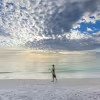
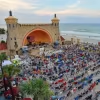
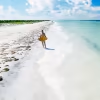
A splash pad swirling with colors; abundant palms; and shaded picnic tables welcome visitors to Romano Park. A picturesque stone building with arches and towers frames the Atlantic. The beach is wide, and the sand is a gorgeous, rich cinnamon color which fades to a latte-hue away from the water. It’s hardpacked, making it ideal for jogging or a pedal on a beach cruiser. The shoreline has high rises as well as lower buildings. Expect some waves, which will vary depending on the tides, wind, and offshore systems.
On or near the beach
Build a sand castle, swim, surf, or cool off in the rolling ocean. Salt air and waves are a recipe for a hungry tribe, but the remedies are simple: Pack a picnic, bring something to grill or grab something from the snack bar. Surfari Surf School offers surf lessons and camps, as well as surfboard, SUP, wetsuit and bike rentals. Beyond the beach, historic Tomoka State Park delivers fishing, canoeing, and unprecedented bird watching.
Accessibility
Beach wheelchairs are available for use from the Ormand Beach Lifeguard Station on Cardinal Drive. While Romano Beachfront Park doesn’t offer beach driving and parking, other area beaches do (see the Volusia County Florida Beaches app). Beach patrons displaying a handicap insignia in their vehicles are permitted to park adjacent to the east side of the established traffic lanes. Vehicles with a handicap ID are admitted to the beach free.
Facilities
Romano Beachfront Park’s amenities include a splash pad, playground, pavilions, concessions, outdoor grills, a picnic area, and restrooms. Surfari Surf School features surfboard, SUP, and bike rentals. The Volusia County Florida Beaches app provides real-time information on beach parks, lifeguard stations, drive-on ramps, access points, restrooms and park features.
Lifeguards
Yes
Parking
Free off-beach parking
FREQUENTLY ASKED QUESTIONS ABOUT ORMOND BEACH AND ANDY ROMANO BEACHFRONT PARK
Q. Where is Ormond Beach?
A. On the Atlantic in Volusia County, immediately north of Daytona Beach.
The character is different from its neighbor. Ormond generally quieter and more residential than Daytona Beach.
Q. What is Andy Romano Beachfront Park?
A. The city's main beachfront park, four acres at 839 S. Atlantic Ave., and the easiest place to start a day here. It is open sunrise to sunset.
The city lists a gazebo and pavilion, outdoor grills, a picnic area, a playground, restrooms and its own parking. The park also has a splash pad and concessions, which is what makes it the pick for families with small children over a plain beach approach. Its park page carries the current details.
Q. Do I have to pay to park at Andy Romano?
A. No. The park has its own off-beach lot, and parking there is free.
That is separate from Volusia County's charges for driving onto the sand and for the county's own off-beach lots, which are sold through Park Volusia. If you park at the city park and walk over the dune, you are not paying the county anything.
Q. Are there other beachfront parks in Ormond Beach?
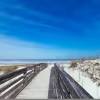
A. Yes, several, and they are quieter than Andy Romano. Tom Renick Park, Al Weeks Sr. North Shore Park and Argosy Beach Park are Volusia County coastal parks that are north of the city in Ormond-by-the-Sea. They also provide beach access along S. Atlantic Avenue and Ocean Shore Boulevard.
North Shore Park is the one to know if you need facilities without the crowd: it has restrooms, showers, parking and sidewalks that look directly over the beach. The city's parks pages list the full set.
Q. Why is Ormond Beach called the Birthplace of Speed?
A. Because of the sand itself. The smooth, hard-packed sand along this shore became a proving ground for automobile inventors and drivers in the early 1900s, when no paved road in the country offered a comparable surface.
The city's racing connection began in 1903, when the Winton Bullet beat the Olds Pirate by two-tenths of a second in a Challenge Cup on the beach. On Jan. 26, 1906, F.E. Stanley's Rocket Racer, driven by Fred Marriott, set Ormond's most famous mark at 127.659 mph, and it stood for four years.
You can still see it commemorated. Birthplace of Speed Park at 21 Ocean Shore Blvd. has a small replica of the Ormond Garage and was dedicated on March 28, 2013, exactly 110 years after the first race. The city also holds an antique car show and a nighttime Gaslight Parade over Thanksgiving weekend. The city's Birthplace of Speed page has the history.
Q. Can I drive on the beach here?
A. In designated areas only, and Ormond has stretches where it is allowed and stretches where it is not. Driving needs a county pass, and access ramps open and close with the tide and with conditions.
Where driving is permitted, park on the seaward side of the conservation zone, do not cross beyond the conservation zone markers, and observe the posted speed limit on the sand. The county's beach driving and parking page has current rules and prices. If you would rather not deal with any of it, park free at Andy Romano and walk.
Q. Are there lifeguards?
A. Yes. Volusia County Beach Safety covers Ormond Beach, with staffing that expands in summer and thins outside it, and towers are daytime only.
Swim near a staffed tower. Away from one, or outside staffed hours, you are swimming at your own risk.
Check the beach warning flag when you arrive; current beach conditions and staffed lifeguard towers are also available through the Volusia Beaches app.
Q. What is the water like?
A. It’s the Atlantic, which means more waves than the Gulf side of the state, not simply more variety. Conditions change daily, and rip currents can occur even when the ocean appears calm.
If a rip current pulls you away from shore, swim parallel to the beach until it releases you rather than fighting straight back in. Signal a lifeguard if a tower is staffed near you, and call 911 in an emergency.
Q. Can I bring my dog?
A. Yes, on one specific stretch. Ormond Beach has a designated dog-friendly section of sand running from Rockefeller Drive to Milsap Road. That is the only part of the Ormond shoreline where dogs are allowed.
Dogs must be leashed at all times on a leash no longer than six feet, they are not permitted in wildlife areas, and you clean up after them. The county's dogs on the beach page lists every permitted stretch in Volusia County.
Q. Is the beach accessible?
A. Partly. Beach wheelchairs are lent free of charge from the Ormond Beach lifeguard station on Cardinal Drive, first come and first served, and the supply is limited, so go early in the day rather than mid-afternoon.
North Shore Park is the most accessible of the beachfront parks, with restrooms, showers and sidewalks overlooking the sand. Vehicles displaying a disabled ID are admitted to the beach free and may park adjacent to the east side of the traffic lanes. The county now encourages registration with ParkVolusia because automated ramps use license-plate recognition.
The county's beach information for the disabled page covers the rest.
Q. What else is worth seeing nearby?
A. The Casements, John D. Rockefeller's former winter home on the Halifax River, is now a city-run cultural center and is a short drive from the beachfront parks.
The Ormond Scenic Loop and Trail runs north from town through coastal hammock and along the river. Ormond also sits at the northern end of the Volusia beaches, so the undeveloped shoreline toward Flagler County starts just up the road.
Q. What about sea turtles?
A. Nesting season in Volusia County runs May 1 through Oct. 31, and Ormond's beaches are part of the nesting shoreline.
Keep lights off the beach after dark, use a red, low-watt flashlight only if you need one, and dim your phone screen. Leave nests and their markers alone, fill in any holes you dig, knock down sandcastles, and take chairs and gear off the sand overnight, because a hatchling can be stopped by any of it. The county's sea turtle page has the local rules.
Q. When should I visit?
A. Spring and fall give the most comfortable air, and the water is warmest in summer. In January and February the Atlantic here sits in the low 60s Fahrenheit (about 17 Celsius), which is cold for a long swim, though the air is often fine for walking the beach.
The exception is race and event weekends in Daytona, when traffic backs up along the whole barrier island. Check what is on before you plan a spring visit.


