





CANAVERAL NATIONAL SEASHORE
Where
Apollo Visitor Center is sited at 7611 S Atlantic Ave, New Smyrna Beach, FL 32169. Five parking lots with beach accesses run south from it along a six-mile road. Here are detailed directions to Apollo Beach and Playalinda Beach, both in Canaveral National Seashore, but more than an hour drive apart.
Vibe
Wild and pristine, Canaveral National Seashore boasts the longest stretch of undeveloped Atlantic coastline in Florida. It encompasses almost 58,000 acres and includes 24 glorious miles of unspoiled beach. It invites you to watch ospreys ride the sea breeze; to listen to the sound of the waves and play in them, and to reflect on the beauty of a world unmarked by civilization.
See, feel
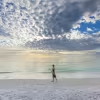
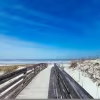
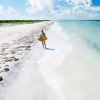
Forget hotels, T-shirt shops, and eateries: Apollo Beach is about the surf, sand and sky, which stretch as far as the eye can see. Boardwalks span the impressive dunes, bristling with saw palmettos and brush, and have decks with benches where you can sit and admire the view. The sand is mostly crushed coquina shells, giving the beach a rich cinnamon hue, and strewn with shells, so you may want beach shoes or protective footwear. Most people set up by the boardwalk, but you can hike down the beach to have more privacy. Beach #1 tends to be the most crowded. Expect some waves, which will vary depending on the tides, wind, and offshore systems.
On or near the beach
Swimming, surfing, shelling and fishing are favorite pastimes. The Park also features other outdoor experiences that include back-country camping, horseback riding, kayaking, and birdwatching.
Accessibility
This page details park accessibility. At Apollo Beach, parking areas one through five provide beach access, and all are wheelchair accessible. Accessible parking spaces are located at the entrance of every beach ramp. At the Apollo Beach Visitor Center, you can check out a beach wheelchair to use. The Visitor Center is accessible by wheelchair as well as the pavilion and the dock behind it.
Facilities
The Apollo Visitor Center offers interpretive displays, restrooms, a gift shop, and a spacious auditorium for enjoying the closed-captioned park video. Bring everything you need for the beach—chairs, towels, water, food, sunscreen and the like. Beach #1 is the only beach in Canaveral National Seashore with a rinse-off shower. Each parking area has a restroom with chemical toilets. There’s no running water.
Lifeguards
Lifeguards are stationed at Parking Area 1 on Apollo Beach and at Parking Area 2 on Playalinda Beach from late May through early September, from roughly 10 a.m. to just before 6 p.m. Check out Park safety information.
Parking
160 parking places; arrive early on weekends as the park will close when they’re filled.
FREQUENTLY ASKED QUESTIONS ABOUT CANAVERAL NATIONAL SEASHORE
Q. Where is Canaveral National Seashore, and how is it laid out?
A. Canaveral National Seashore protects about 24 miles of undeveloped Atlantic barrier island on Florida's Space Coast, spanning Volusia and Brevard counties. It is the longest stretch of undeveloped coast on Florida's east coast.
It has three beach districts. Apollo Beach is the north district, reached through New Smyrna Beach. Playalinda Beach is the south district, reached through Titusville. Between them lies Klondike Beach, a roadless stretch open only to hikers with a backcountry permit. You cannot drive from one end of the park to the other; pick your district before you go.
Q. What are the hours?
A. The seashore opens at 6 a.m. year-round. Closing time shifts with the season: 8 p.m. in summer and 6 p.m. in winter.
Check the park's operating hours page before you go, and note that Playalinda Beach closes for some rocket launches at the neighboring space center.
Q. Is there an entrance fee?
A. Yes. An entrance fee is required, and the park does not accept cash. Bring a credit card, debit card or touchless payment. A standard pass covers seven consecutive days, with separate rates for a private vehicle, a motorcycle, or per person on foot or bicycle.
An annual park pass and the interagency America the Beautiful pass are also honored. Passes are sold only at the Apollo Beach and Playalinda Beach entrance stations, not at headquarters or the visitor centers. Current rates are on the park's fees page.
Q. Can the park fill up?
A. Yes. The park cannot predict when it will reach capacity, and when it does, staff restrict entry until space frees up. Expect lines at the entrance stations on busy days.
Arriving early is the reliable fix, especially on weekends, holidays and launch days.
Q. Are there lifeguards?
A. Lifeguards are on duty from late May through early September, roughly 10 a.m. to just before 6 p.m., at designated areas of Apollo and Playalinda beaches.
Outside that season, outside those hours, and anywhere along Klondike Beach, the water is unguarded. This is an open Atlantic beach where surf and rip currents vary, so swim near a staffed tower when one is open, and treat everything else as swim-at-your-own-risk. Check for alerts and conditions.
Q. Can I bring my dog?
A. Dogs are not allowed on the beach or on the beach boardwalks at Canaveral National Seashore.
They are welcome in other parts of the park, including areas with lagoon access, park trails and other non-beach areas. Service animals are permitted throughout. See the park's basic information page for current details.
Q. Is the seashore accessible for visitors with mobility needs?
A. In part, and it differs sharply by district. A beach wheelchair can be checked out for up to two hours at the Apollo Beach Visitor Center; Playalinda Beach does not currently have one. Apollo Beach has wheelchair-accessible ramps at parking areas 1 through 5, ranging from flat to slightly inclined.
Accessible parking spaces sit at the ramp entrances across the park's beach access areas at both Apollo and Playalinda. The Apollo Visitor Center is fully wheelchair accessible, including its pavilion and dock, and the loop trail at Seminole Rest is accessible for about half a mile. Audio-described brochures and audio tours are available. See the accessibility page or call the Apollo Beach Visitor Center to check on the beach wheelchair.
Q. What about sea turtles?
A. This is one of the most important nesting stretches in the country. Three species nest inside the park: loggerhead, green and leatherback. Loggerheads lay several thousand nests a year, greens up to a few hundred, and only a handful of leatherback nests. Nesting runs from May into August, when rangers and volunteers screen nests nightly, and hatchlings continue emerging into October.
The official season differs on either end of the park, because it spans two counties: in Volusia County, which covers Apollo Beach, it runs May 1 through Oct. 31, and in Brevard County, which covers Playalinda Beach, it runs March 1 through Oct. 31.
Leave nests and their screens alone, fill in any holes you dig, take your gear off the beach at night, and keep lights off the sand after dark. See the state's guidance on sea turtles and lights.
Q. What else is there to do besides the beach?
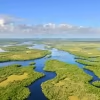
A. Turtle Mound, near the north end, is a prehistoric shell midden with a boardwalk to the summit and a long view over Mosquito Lagoon. The lagoon side of the park is popular for paddling, fishing and wildlife watching, with manatees, dolphins and a great deal of birdlife.
Because the park borders the space center, it is also a well-known spot for rocket launch viewing, though access rules change on launch days.
Q. What should I bring?
A. Treat this as an undeveloped beach. There are no concessions, so bring water, food, sun protection and a bag for your trash.
Facilities are limited and concentrated near the parking areas and visitor centers, so plan for a walk to and from the car.
Q. When is the best time to visit?
A. Spring and fall bring the most comfortable weather. Summer is hot and humid with the warmest water, afternoon thunderstorms and the only guarded swimming of the year.
Winter days can be pleasant for walking the beach, but the water is often too cold for comfortable swimming, and the park closes earlier. Check for alerts and conditions before you go.


