



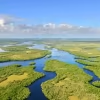
CAPTIVA ISLAND
Where
Captiva Island features several public beaches, including Turner Beach Park, Alison Hagerup Beach Park, and Andy Rosse Lane Park. The latter is the most popular, and is located at 11570 Andy Rosse Lane, Captiva, FL 33924. ’Tween Waters Island Resort & Spa and South Seas Island Resort offer private beaches.
Vibe
Upscale, hidden gem with a quirky, relaxed personality and world class shelling. Captiva Island feels like it’s out of another time, with no chain restaurants, high rises or traffic lights. In this colorful seaside escape, expect to see families, couples and groups of friends—and possibly a celebrity or two.
See, feel
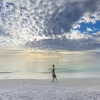
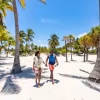
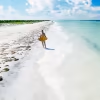
As you drive down Andy Rosse road to the beach that shares its name, it has a tropical mood, with lush landscaping and palms crowding the street. When you see The Mucky Duck, a British style bar that serves up crab cakes and cold beer on picnic tables just 60 feet from the Gulf waters, you’ll know you’ve arrived. The beach is fairly narrow, with latte-hued sand abundant with crushed shells—and many whole shells, often piled there by Mother Nature and the tides. The water is a beautiful turquoise color, with little surf. Yolo Watersports frequently has jet skis bobbing in the waves, or a parasailing boat offering rides. Many folks on the beach will be hunched over, looking down-- in the time-honored ‘Sanibel Stoop,’ on a quest for the stunning shells that Captiva scoops up from the Gulf. While the water tends to be calm, winds and offshore systems can cause rough conditions.
On or near the beach
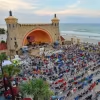
Shelling, swimming, fishing, and soaking up the sun are all favorite ways to enjoy the salt air. Don’t go home too early: celebrating the stunning sunsets at Andy Rosse is as much a ritual as shelling, and often, a crowd will gather for the spectacle. Yolo Watersports beachfront outfitters offer adventures like parasailing and flyboarding, as well as rentals of all kinds. The Mucky Duck serves up seafood, a bar with live music in the evenings, and has indoor dining if you need to cool off. Stroll down Andy Rosse Lane to refuel at brightly painted restaurants that include the Keylime Bistro, RC Otter’s, and Sunshine Seafood Cafe and Wine Bar.
Accessibility
Turner Beach is ADA accessible, with accessible restrooms, and a valid placard or plate parks free in any designated space rather than only the marked ones. Alison Hagerup has accessible parking and beach access. You can rent a beach wheelchair at Billy’s Rentals on Sanibel, Captiva’s sister island.
Facilities
Paddle craft launch and landing
Lifeguards
No. Swim at your own risk.
Parking
Andy Rosse Park doesn’t have a dedicated parking lot. Alison Hagerup Beach Park , about ¼ mile north of Andy Rosse (walking, on the beach) offers paid parking. Here’s info about other Captiva Island parking—but it’s limited, and always a good idea to arrive early.
FREQUENTLY ASKED QUESTIONS ABOUT CAPTIVA ISLAND
Q. Where is Captiva Island?
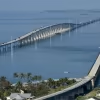
A. Captiva sits just north of Sanibel in Lee County, on Florida's southwest Gulf coast. The two islands are separated by Blind Pass, a tidal cut crossed by a short bridge.
The distinction matters. Sanibel is an incorporated city with its own code. Captiva is unincorporated Lee County, so its beach rules are different from Sanibel's. That means that rules can change the moment you cross the bridge, and the dog rule is one of those differences.
Q. How do I get there?
A. You drive. Cross the Sanibel Causeway, which is tolled and all-electronic, so you either have a transponder or you get billed by plate. Fares are on the Lee County tolls page, and you are charged only on the way in.
From there follow Causeway Road to Periwinkle Way, Palm Ridge Road and Sanibel-Captiva Road, known locally as San-Cap, then across the Blind Pass bridge where it becomes Captiva Drive. Turner Beach is about 14 miles from the mainland toll plaza, and the far end of Captiva about 18.
Q. Where can I actually park?
A. This is the hard part of a Captiva day, so plan it first.
Turner Beach, on the Captiva side of the Blind Pass bridge, has 28 spaces. It is owned by Lee County and operated by the City of Sanibel, and payment is by mobile app only, with no kiosks; the lot code is FL2533. See the beach parking page. A Lee County annual parking pass is valid here, and a state handicap placard parks free in any designated space.
Alison Hagerup Beach Park at the north end takes contactless payment through Oobeo; text P8130 to 87517. Parking there is officially described as very limited, and the proceeds go directly toward beach nourishment and wildlife habitat. Accessible spaces are free.
And a correction worth having in advance: Andy Rosse Lane Park has no parking at all, at either end of the lane. The west end is foot traffic only. People do gather there for sunset, but they walk or bike in.
Q. What is at Turner Beach?
A. Restrooms, outdoor showers, drinking fountains, bike racks, a paddlecraft landing and a rock jetty that anglers work for snook and redfish. The park covers two acres and is open 24 hours a day, year-round, with parking enforced around the clock. Trailers and RVs are not permitted in the lot.
Its real draw is the shelling and the sunset. The beach faces west across open Gulf, and both Lee County and the City of Sanibel describe it in writing as one of the best sunset spots in southwest Florida.
Q. Can I swim at Blind Pass?
A. Not near the bridge. Lee County's guidance for Turner Beach is direct: avoid the area by the bridge, where the water deepens quickly and strong undertows can occur, and move farther down the beach to swim.
There are no lifeguards on Captiva. Lee County's park ordinance puts it plainly: bathing and swimming are done at the risk of the park user. Read the water before you get in, and keep children well away from the pass itself, where the tide runs hard through a narrow gap on both the ebb and the flood.
Q. Why is the shelling so good here?
A. Geography, mostly. The Bailey-Matthews National Shell Museum credits an exceptionally broad continental shelf off southwest Florida, the way local currents behave, and the islands' unusual east-west orientation, which is at odds with most of Florida's coast. At Turner Beach the swift tides moving through Blind Pass keep depositing fresh material along the shoreline.
Go at low tide, ideally after a windy stretch. The museum itself, on Sanibel-Captiva Road, is open 10 a.m. to 5 p.m. from Monday through Saturday. It’s closed on Sundays through Nov. 1, except for Sunday, September 6 and Sunday, Oct. 11. It holds close to 600,000 specimens plus living aquariums.
Q. Is there a limit on what I can collect?
A. Yes, and it is enforced. In Lee County you may not harvest or possess any shell containing a live organism, apart from oysters, hard clams, sunray venus clams and coquinas. Sand dollars, sea stars and sea urchins are covered by the live-harvest prohibition, too. .
The rule is Florida Administrative Code 68B-26.004, and it covers the beaches and nearshore waters out to half a mile. Taking a live shell also requires a saltwater fishing license. See the state's page on collecting sea shells. Turn the shell over. If anything is home, put it back where you found it.
Q. Can I bring my dog?
A. Not on Captiva. Lee County states it flatly on both beach park pages: dogs are not allowed on Captiva beaches, and that includes Turner Beach even though Sanibel crews maintain it.
Sanibel, on the other side of the bridge, does allow leashed dogs on its beaches. Same trip, different island, opposite answer.
Q. What are the beach rules?
A. Alcohol is prohibited, year-round, in Lee County parks and on Captiva beaches. So is glass. No open fires, no motorized vehicles on any Lee County beach, and no hammocks strung from vegetation.
The rest of the posted Captiva list: no live shelling, keep fishing poles attended at all times, stay off the dune vegetation, give nesting shorebirds and turtles a wide berth, keep music low and dispose of fishing line properly. The full ordinance is in Lee County's beach park rules. Beach parks are first-come, first-served, and no space, shelter or parking spot can be reserved.
Q. What about sea turtles?
A. Nesting season runs May 1 through Oct. 31. During those months the county's lighting rules apply from 9 p.m. to 7 a.m.: close blinds, switch off decorative uplighting, shield or redirect anything visible from the beach, and use amber, orange or red lights of 570 nanometers or longer. Skip flashlights and flash photography on the sand after dark.
All beach furniture and equipment has to come off the sand every night, and holes get filled in. Details are on Lee County's sea turtle page and the Captiva Erosion Prevention District's nesting page.
Monitoring here is done by the Sanibel-Captiva Conservation Foundation, which holds the state permit and surveys 18 miles of beach across both islands from April through October. Its sea turtle program takes reports at 978-728-3663. For a dead, injured or disoriented turtle, call the state at 888-404-3922.
Q. What condition are the beaches in?
A. Restored. The Captiva Erosion Prevention District confirmed in January 2026 that dredging and sand placement for the island-wide renourishment project were finished and that sea oat plugs had been planted throughout the new dune system.
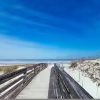
What that means on the ground: expect roped-off dune areas and marked entry points at the public accesses while the vegetation establishes. Use the marked crossings. The project page has the current status. A standing advisory also asks visitors to take care along the shoreline and in the water, where some buried debris may remain.
Q. Is the beach accessible?
A. Turner Beach is ADA accessible, with accessible restrooms, and a valid placard or plate parks free in any designated space rather than only the marked ones. Alison Hagerup has accessible parking and beach access.
Beach wheelchairs are the gap. The City of Sanibel does not provide them and directs visitors to a commercial renter on Sanibel; see its beach wheelchair page. Arrange one before you cross the bridge.
Q. When should I come?
A. The Gulf here is warm enough to swim in for most of the year. It sits in the upper 60s Fahrenheit (about 20 Celsius) in January, climbs through the 70s (low to mid 20s Celsius) in spring, and holds in the upper 80s (about 31 Celsius) from June into September.
For crowds, think in terms of where people sleep. Lodging demand across Lee County peaks from January through March and drops off sharply by summer, so the winter and early-spring stretch is when Turner Beach's 28 spaces fill first. Arrive early in season, or come in October, when the water is still warm and the lot may not fill as quickly.


