















Miami surprises a lot of first-time visitors. They step off the plane expecting to need a rental car for everything, then discover a city that actually wants you to skip the hassle. Between trains that zip you from the airport to downtown for pocket change, elevated people movers that circle skyscrapers for free, and trolleys that cost absolutely nothing to ride, getting around South Florida is easier than most people think.
Sure, Miami has its car-centric moments. But for visitors staying in Miami, Miami Beach, or anywhere near downtown, you can piece together a trip using mostly public transit, rideshares for the gaps, and maybe a rental car for a day trip or two. The key is knowing which tools work best for which situations. This guide breaks down every option, from the Metrorail that serves the airport to the high-speed Brightline train that can get you to Orlando in time for lunch.
Public Transportation | Train Travel | Airport Access | Getting to Major Venues and Attractions | Day Trips from Miami | Driving and Road Information | FAQ

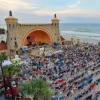
Miami's Metromover links the city's performing arts center and to a corporate row, boutiques, restaurants and nightlife.
Public Transportation: The Backbone of Miami Transit
Miami-Dade County runs one of the more robust transit systems in Florida, and it genuinely works if you know how to use it. The Metrorail forms the spine of the system. This elevated rapid transit line stretches 25 miles across two color-coded routes, serving 23 stations from the northern suburbs down to Dadeland. Think of it as Miami's answer to a metro system, just above ground instead of below.
Note: For any of the schedule and fare information mentioned below, please be sure to check the linked resources as these details can change.
Riding the Metrorail
The Green Line runs the full length from Palmetto Station in the northwest down to Dadeland South. The Orange Line splits off at Earlington Heights and heads to Miami International Airport. If you're flying into MIA, that Orange Line connection is your best friend. Walk to the free MIA Mover from the third level of your terminal, ride it to the Metrorail station, tap your credit card at the fare gate, and you're downtown in 20 minutes for $2.25.
A few stations deserve special attention. Government Center and Brickell both connect to the Metromover, which we'll get to in a moment. Historic Overtown/Lyric Theatre sits right next to the Brightline station at MiamiCentral, making transfers between trains seamless. Vizcaya station serves the gorgeous museum and gardens of the same name. Coconut Grove station puts you in the heart of that neighborhood's shops and restaurants. And both Dadeland stations connect to massive shopping centers if retail therapy calls.
Trains run from 5 AM to midnight every day. During rush hour, you'll catch one every five minutes when both lines overlap. Off-peak gets you trains every 7 to 15 minutes, and weekends slow down to every 15 to 20 minutes. Not bad for a city this size.
Here's something smart about Miami's fare system: if you tap a contactless credit card or phone at the gate, you'll never pay more than $5.65 in a single day. Hit that cap and every ride after that is free until midnight. A single trip costs $2.25, but heavy travelers basically get an automatic day pass. Skip the EASY Card entirely unless you're staying for weeks. Just tap and go.
The Free Metromover Loop
Now for Miami's secret weapon: the Metromover. This elevated people mover circles through downtown Miami and Brickell on three connected loops, hitting 21 stations along 4.4 miles of track. The whole thing runs completely free.
Three loops cover different zones. The Inner Loop handles the downtown business district in a clockwise rotation. The Omni Loop extends north to the Arts and Entertainment District, reaching the School Board Station. The Brickell Loop dips south into the financial district, serving the booming condo towers and Brickell City Centre.
Stations worth knowing: Bayfront Park gets you to Bayside Marketplace; Adrienne Arsht Center drops you at the performing arts complex; Museum Park serves both the Pérez Art Museum and the Frost Science Museum; Park West puts you closest to the Kaseya Center if you're catching a Heat game; and Freedom Tower sits near the historic landmark of the same name.
The Metromover runs 5:30 AM to 10 PM daily. During rush hour, you'll see a train every 90 seconds. Off-peak stretches that to about three minutes, which still beats waiting for most buses. Transfer to the Metrorail at either Government Center or Brickell Station.
Pro Tip: The free Metromover provides an excellent aerial sightseeing tour of downtown Miami. Ride the entire system in about 30 minutes for views of Brickell's skyscrapers and Biscayne Bay.
Metrobus: Filling the Gaps
The Metrobus network covers what the trains can't reach. Over 95 routes fan out across Miami-Dade County, with some lines pushing into southern Broward and even down into the Keys. Most visitors only need a handful of key routes.
Route 150, the Miami Beach Airport Express, connects MIA directly to Mid Beach along the Julia Tuttle Causeway. Limited-stop service from Mid Beach to South Beach along Collins Avenue/Indian Creek Drive and Washington Avenue. Route 120, the Beach MAX, links downtown to Miami Beach along Collins Avenue. Route 3 runs 24 hours along Biscayne Boulevard, connecting Aventura to downtown. Route 8 cuts through Little Havana on Flagler Street. Routes 7 and 7A will get you near to LoanDepot Park for Marlins games.
Bus fares match the Metrorail at $2.25 per ride, with that same $5.65 daily cap if you're using contactless payment. Express routes to other counties cost a bit more at $2.65. Transfers between bus and rail are free as long as you're using the same payment method. Unlike the trains, buses do accept exact change in cash.
Free Trolleys Throughout Miami
Multiple cities in the Miami area operate free trolley systems that complement the paid transit. The City of Miami Trolley alone runs 13 different routes.
The Brickell Trolley connects high-rise residents and visitors to Brickell City Centre and Mercy Hospital. The Wynwood Trolley loops through the arts district and Midtown, making it perfect for gallery hopping without worrying about parking. The Little Havana route serves Calle Ocho and the heart of Cuban Miami. The Coconut Grove Trolley links the Grove to the Douglas Metrorail station. Each route runs roughly every 10 to 15 minutes, Monday through Saturday from 8 AM to 11 PM, every 20 minutes. Citywide Free Trolley - City of Miami Beach
Trolleys arrive every 15-45 minutes. Get Trolley Info, Schedules, & Maps - Miami
Over on Miami Beach, the Miami Beach Trolley operates four routes connecting South Beach, Mid-Beach, and North Beach. Service runs 8 AM to 11 PM daily, about every 20 minutes. The South Beach Loop is your workhorse if you're staying anywhere from Fifth Street up to around 23rd. The Collins Express zips up and down Collins Avenue.
Pro Tip: The Wynwood Trolley provides the easiest way to explore the arts district without parking hassles. Hop on at any stop along the route and you can cover all the major gallery streets and murals.

Brightline is the gleaming, luxurious high-speed passenger train system that knits metropolitan South and Central Florida into a single, wildly diverse destination.
-Brightline
Train Travel: Connecting South Florida and Beyond
Two different train systems serve Miami, and they couldn't be more different in character. Tri-Rail handles the commuter crowd. Brightline caters to travelers who want speed and style.
Tri-Rail: The Practical Commuter Option
Tri-Rail runs 73 miles from Miami up through Fort Lauderdale to West Palm Beach, stopping at 19 stations across three counties. It's the budget-friendly choice for regional travel. The Miami Airport station connects directly to MIA via the same MIA Mover system. The MiamiCentral station downtown puts you steps from Brightline and the Metromover. The Metrorail Transfer Station in Hialeah is exactly what it sounds like.
Here's the real magic: if you show a valid Tri-Rail ticket, you can transfer to the Metrorail for free. That opens up the entire Miami transit network to anyone riding in from Broward or Palm Beach counties.
Fares run from $1.25 to $17.50 depending on distance and discounts, with a weekend and holiday all-day pass costing just $5 for unlimited rides across all zones. That's unbeatable value. Weekday service offers 30-minute headways during peak hours. Weekends drop to 60 minutes off-peak.
Rules for Tri-Rail stations with paid parking:
Fort Lauderdale/Hollywood International Airport Station at Dania Beach and Miami Airport Station
Parking a vehicle at these stations requires registration. A parking management company will monitor and enforce new parking rules and fees using license-reading technology. Registered vehicles may park at $2 hourly, $12 daily, or $125 monthly fee. Tri-Rail passengers can register their vehicle to park for 12 hours in a day at no charge.
Pro Tip: The $5 weekend all-day pass makes Tri-Rail unbeatable for exploring South Florida on Saturdays and Sundays. You can travel the entire 73-mile corridor from West Palm Beach to Miami as many times as you want.
Brightline: High-Speed Comfort
Brightline is America's only privately owned intercity passenger railroad, and it shows. Trains hit 125 mph on the Orlando run. Stations feel more like airport lounges than traditional train depots. The whole experience aims higher than most American rail.
Six stations connect Miami to Orlando: MiamiCentral downtown, Aventura in northern Miami-Dade, Fort Lauderdale, Boca Raton, West Palm Beach, and Orlando International Airport. Travel times clock in at 30 to 38 minutes from Miami to Fort Lauderdale, just over an hour to West Palm Beach, and roughly 3 hours 25 minutes all the way to Orlando.
Brightline offers two classes. SMART is business class with comfortable seats, Wi-Fi, and the option to buy snacks and drinks. Fares between South Florida cities start around $11 to $28. PREMIUM bumps you to first class with lounge access, complimentary food and beverages, extra legroom, and free Uber rides within five miles of South Florida stations. Miami to Orlando in PREMIUM starts around $149, though prices fluctuate based on demand.
Sixteen daily round trips run between Miami and Orlando, roughly every two hours. South Florida sees 18 frequencies per day. The trains never stop running, even on holidays. You can book through the Brightline app, website, or station kiosks. Show up 20 minutes early, because boarding closes five minutes before departure.
MiamiCentral shares space with Tri-Rail and sits within easy walking distance of Metrorail and Metromover connections. An airport connector shuttle runs to MIA for $12 if you have a same-day Brightline ticket, operating from 8 AM to 7 PM.

Three major airports serve the greater Miami area, each with different transit connections and strategies for getting into the city.
Airport Access: Three Gateways to Miami
Three major airports serve the greater Miami area, each with different transit connections and strategies for getting into the city.
Miami International Airport
Miami International Airport sits about eight miles northwest of downtown. The Metrorail Orange Line offers the cheapest and often fastest connection to the city. Take the free MIA Mover from the third level of your terminal to the Metrorail station, tap in for $2.25, and you're at Government Center in downtown Miami within 20 minutes.
The Miami Beach Airport Express, bus route 150, runs every 30 minutes from 6 AM to 11:40 PM. Same $2.25 fare, but the trip takes 45 to 60 minutes, depending on traffic and how far down the beach you're going.
Taxis now run on meters after Miami eliminated flat rates in 2022. Expect $25 to $35 to downtown, $35 to $45 to South Beach, plus a $2 airport surcharge. Uber and Lyft pick up from the arrivals level and run about $18 to $30 to downtown or $18 to $35 to the beach, plus their own $2 airport fee.
The Brightline airport connector shuttle links MIA to MiamiCentral for $12 if you're riding Brightline that day. It runs 8 AM to 7 PM, every 30 minutes during regular hours and every 15 minutes during peaks.
Fort Lauderdale-Hollywood International Airport
Fort Lauderdale Airport sits 26 miles north of Miami, about 35 to 45 minutes by car. Budget carriers like Spirit, JetBlue, and Southwest use FLL heavily, which sometimes means cheaper fares than MIA.
A free shuttle connects the terminals to Dania Beach Tri-Rail Station in about 15 minutes. From there, Tri-Rail runs to Miami Airport Station in 43 to 50 minutes for $3 to $6. Total travel time pushes close to an hour and a half with the shuttle connection, but you can't beat the price.
Brightline also connects FLL to Miami via its own airport shuttle, running 8 AM to 7 PM for $12 with a same-day ticket. The train itself takes about 30 minutes to MiamiCentral, with fares starting around $12 to $25.
Uber or Lyft from FLL to Miami runs about $53 plus a $4.50 airport surcharge. Taxis will set you back $70 to $90 with tolls. The savings on airfare might justify those costs, or they might not. Do the math for your specific trip.
Palm Beach International Airport
Palm Beach International Airport sits 70 to 77 miles north of Miami. You wouldn't pick PBI if Miami was your only destination, but it makes sense if you're touring Palm Beach first or found a significantly cheaper flight.
Tri-Rail connects from West Palm Beach Station to Miami Airport Station in about an hour and 49 minutes for $5 to $11. The airport offers free shuttles or rideshare vouchers to get from PBI to the Tri-Rail station.
Brightline from West Palm Beach to Miami takes about an hour with fares starting around $15 to $22 in SMART class. A rideshare from PBI all the way to Miami will cost $100 to $120 and take 75 to 90 minutes.

Hard Rock Stadium, Miami -- The Rodriguez Group
Getting to Major Venues and Attractions
Miami's biggest venues sit scattered across the metro area, and getting to them requires different strategies.
Hard Rock Stadium
Hard Rock Stadium hosts the Dolphins, the Miami Open tennis tournament, the 2026 World Cup, and major concerts. It sits in Miami Gardens in the northern reaches of the county, which creates transportation challenges. Neither Metrorail, Tri-Rail, nor Brightline get you close. But fans can enjoy complimentary round trip shuttle service directly to Hard Rock Stadium from the Aventura Brightline Station. These buses will depart 10 minutes after the arrival of End Zone Express train.
Some Metrobus routes serve the area, including routes 2, 18, 27, and 199. Route 297 runs as a game day express from downtown. Tri-Rail offers shuttle service from Golden Glades Station on game days.
The smartest move is using the GEICO HRS Express Shuttle. Free climate-controlled buses run from Lot 70 near the Seminole Hard Rock Hotel and Lot 95 at the Golden Glades Parking Garage. Park for $10 at either lot and skip stadium traffic entirely. Shuttles start three hours before kickoff and run for 75 minutes after the game ends.
On-site parking requires pre-purchased passes for NFL games. No day-of purchase exists for Dolphins games. Uber and Lyft work, but expect surge pricing. Book Uber Shuttle up to seven days in advance for fixed-fare rides.
Whatever you do, arrive two to three hours early for NFL games. Traffic on Northwest 27th Avenue and I-95 gets brutal.
Pro Tip: Take a rideshare to Lot 70 or Lot 95, then use the FREE shuttle. This strategy avoids surge pricing, stadium traffic, and the stress of finding on-site parking.
LoanDepot Park
The Miami Marlins ballpark sits in Little Havana, about a mile from the nearest Metrorail stations. Culmer Station and Civic Center Station both get you within walking distance, though the walk from Civic Center connects to a free City of Miami Trolley if you time it right.
The Route 55 Marlins Park Shuttle runs from Historic Overtown/Lyric Theatre Metrorail Station, starting 90 minutes before first pitch and continuing through 60 minutes after the final out. Brightline also offers HOME RUNNER service from its stations in Fort Lauderdale, West Palm Beach, Boca Raton, Aventura, and Orlando, including a free shuttle between MiamiCentral and the ballpark with your ticket.
Parking exists in four garages and six surface lots. Prepaid parking runs about $30 and guarantees you a spot. Day-of parking costs $20 to $40 through the PayByPhone app on a first-come basis. The ballpark offers free bicycle parking at the Third Base and Home Plate garages.
Kaseya Center
The Kaseya Center anchors the downtown waterfront on Biscayne Boulevard, which makes it remarkably easy to reach by transit. The free Metromover runs right past it.
Park West Station drops you one block west of the arena. Freedom Tower and Bayfront Park stations are both close enough for an easy walk. The Metromover extends its hours to 1 AM for events. Take the Metrorail to Government Center, transfer to the Metromover Omni Loop, and exit at Park West. You walk to the arena without dealing with parking or traffic.
Downtown development has eaten most of the parking in the area. The arena offers only pre-paid spots and valet service on-site. The Miami Worldcenter Garage at 900 Northeast 2nd Avenue sells advance parking for Heat games. Bayside Marketplace has some parking south of the arena but expect to pay $25 or more on game nights.
Transit really is the smart play here. Rideshare pickup and drop-off happens at Bayshore Drive and HEAT Boulevard near Gate 6 if you absolutely need it.
Pro Tip: The Metromover makes getting to Heat games remarkably easy and completely free. Take Metrorail to Government Center, transfer to the Omni Loop, and exit at Park West. You will arrive steps from the arena without dealing with parking or traffic.
Vizcaya Museum and Gardens
Vizcaya gets its own Metrorail station. Exit the Vizcaya stop, cross U.S. 1 on the pedestrian bridge, and walk about 10 to 15 minutes along 32nd Road to the entrance. The City of Miami Trolley also serves the area, with both the Brickell and Coral Way routes stopping nearby.
Free parking sits in two lots on either side of South Miami Avenue. No reservations, just first-come first-served. Arrive early on weekends. The museum operates Wednesday through Monday from 9:30 AM to 4:30 PM, with last admission at 4:30.
Miami Beach
Getting to Miami Beach from the mainland takes a little planning. The Metromover doesn't cross the water. Neither does the Metrorail. You need a bus, a rideshare, or a car.
Route 120, the Beach MAX bus, runs from the Adrienne Arsht Center downtown to Miami Beach via the MacArthur Causeway. Route 150, the Airport Express, offers the same service from MIA. Route S (119) crosses the Venetian Causeway to Collins Avenue. Route C (103) uses the MacArthur Causeway. All of them cost $2.25 and connect to the Miami Beach Trolley, which is free.
Once you're on the beach, the free trolley system covers most of what you need. The South Beach Loop, Middle Beach Loop, North Beach Loop, and Collins Express run from 8 AM to 11 PM daily, about every 20 minutes. Track them live on the Transit App or the City of Miami Beach app.
Parking on Miami Beach costs real money. The Entertainment District between Ocean Drive and Pennsylvania Avenue from 5th to 15th Street charges $4 per hour from 9 AM to 3 AM. Most of South Beach runs $2 to $4 per hour. North Beach drops to $1 per hour. City garages typically cost $15 to $20 for the day. Pay through ParkMobile or PayByPhone.
Rideshares from downtown to the beach run $20 to $40 depending on traffic and surge pricing. Weekend causeway traffic can be severe.
Pro Tip: Avoid the parking nightmare in South Beach entirely. Take the Route 150 bus from the airport or Route 120 from downtown, then hop on the free Miami Beach Trolley to get around. You will save money and skip the stress of finding a spot.

The Overseas Highway in the Florida Keys makes for a glorious roadtrip.
-- Peter Cross for VISIT FLORIDA
Day Trips From Miami
Miami sits at the crossroads of several distinct Florida regions, making it a natural base for exploring beyond the city limits.
The Everglades sprawl just 30 to 45 minutes west. The Ernest F. Coe Visitor Center puts you at the main entrance to Everglades National Park in about an hour from central Miami, leading to hiking trails and the Flamingo area. Shark Valley, accessible via the Tamiami Trail on U.S. 41, offers tram tours and a 15-mile bike loop about 45 minutes from downtown. No direct public transit serves the park, so you'll need a rental car or organized tour.
Key Largo sits about 60 miles south, roughly an hour's drive. John Pennekamp Coral Reef State Park claims the title of America's first underwater state park. Fill up on gas in Florida City before tackling The Stretch, a 20-mile section with limited services.
Fort Lauderdale makes an easy day trip at 30 to 35 miles north. Brightline gets you there in 30 minutes for about $11 to $17 one-way. Tri-Rail takes 40 to 50 minutes starting at $2.50. Both beat driving and dealing with parking.
Palm Beach and West Palm Beach sit 70 north, about an hour by car. Brightline makes the run in about an hour for $17 to $25. Tri-Rail takes about two hours for around $8.75, with that magical $5 all-day weekend pass making it even cheaper on Saturdays and Sundays.
Biscayne National Park protects 95 percent water, making most activities boat-based. The park entrance sits about 31 miles from downtown Miami, 45 to 90 minutes depending on traffic. The Homestead National Parks Trolley offers free weekend service from downtown Homestead from November through May. Tours through the Biscayne National Park Institute run $50 to $2,800.
Naples on the Gulf Coast sits 125 miles from Miami, about two hours via I-75 through Alligator Alley or 2.5 to 3 hours on the more scenic US-41 Tamiami Trail. The Tamiami route passes through Everglades backcountry with guaranteed alligator sightings.
Orlando clocks in at 230 to 238 miles, 3.5 to 4 hours by car without traffic. Florida's Turnpike offers the most direct route with well-maintained service plazas. Tolls run about $15 to $20 with SunPass. Brightline covers the distance in approximately 3 hours 25 minutes, making it a viable alternative to driving.
Tampa sits 280 miles away, about four to 4.5 hours via I-75. The route crosses Alligator Alley, a 75-mile stretch through the Everglades with a toll around $3.15. Fill up on gas before entering because services run thin out there.
Key West runs 160 to 166 miles down the Overseas Highway, taking 3.5 to 4 hours without stops but realistically pushing closer to 4 to 5 hours with breaks. The drive ranks as one of America's most scenic roads, officially designated an All-American Road. You'll cross 42 bridges over 113 miles of highway built over water, including the famous Seven Mile Bridge. Watch your speed near Big Pine Key where Key Deer protection zones get strict enforcement. Depart early to beat traffic.

Martin Grade Scenic Highway
Driving and Road Information
If you do rent a car, Florida's road system works pretty efficiently once you understand it. Florida 511 provides real-time traffic conditions, crash information, construction updates, and camera snapshots along major roads. Download the FL511 app for your phone.
Most of Florida's major highways collect tolls. The SunPass system saves you about 25 percent compared to Toll-By-Plate. A SunPass Mini costs about $4.99 for a single vehicle. The SunPass PRO runs about $14.95 but works as a portable transponder in 24 states, including Florida. Most rental companies offer Toll-By-Plate programs that charge tolls to your credit card plus an admin fee around $2.50 per invoice. Factor that into your rental costs.

Miami Beach
--Botbox Productions
How do I get around Miami without a car?
Miami offers multiple car-free options. The Metrorail covers 25 miles with 23 stations including direct airport access. The Metromover circulates free through downtown and Brickell. Free trolleys operate in the City of Miami, Miami Beach, and Coral Gables. Metrobus covers over 95 routes countywide. For beaches, take Route 120 or 150 bus, then use the free Miami Beach Trolley. Uber and Lyft work throughout the area.
Is Miami public transportation safe for tourists?
Yes. Miami-Dade Transit maintains security throughout the system with cameras at stations and transit police patrols. The Metromover and Metrorail serve major tourist areas during daytime and evening hours. Standard urban awareness applies: keep valuables secure and avoid empty train cars late at night. The free trolley services run through well-traveled areas.
What is the easiest way to get from MIA to downtown?
Take the Metrorail Orange Line. Walk to the free MIA Mover from the third level of the terminal, ride it to Miami Central Station, and board the Metrorail. The trip to Government Center in downtown takes about 15 to 20 minutes and costs just $2.25. You can tap a contactless credit card at the fare gate.
Can I take a train from Miami to Orlando?
Yes. Brightline operates high-speed rail service from MiamiCentral to Orlando International Airport Terminal C. The journey takes approximately 3 hours 25 minutes with trains departing every two hours. Fares start around $79 one-way for SMART class. Book at gobrightline.com or through the Brightline app.
How early should I allow for transit to Hard Rock Stadium?
For NFL games, plan to arrive two to three hours early. Hard Rock Stadium has limited direct transit. The best option is taking a rideshare or driving to Lot 70 at the Seminole Hard Rock Hotel area or Lot 95 at Golden Glades, parking for $10, and taking the free GEICO HRS Express Shuttle. Shuttles start running three hours before kickoff.
Are rideshare services available everywhere in Miami?
Uber and Lyft have strong coverage throughout Miami-Dade County, especially in tourist areas. Both operate at all three airports with designated pickup zones. Coverage extends to Miami Beach, downtown, Brickell, Coral Gables, and most suburban areas. Expect surge pricing during major events, peak hours, and bad weather.
What transit apps should visitors download?
Download GO Miami-Dade Transit for official trip planning and mobile passes, Brightline for train bookings, and either Uber or Lyft. The Transit App works well as a third-party option covering all Miami services. For driving, get FL511 for road conditions and SunPass for toll roads. PayByPhone or ParkMobile handles street parking.
What transportation options are best for day trips?
For Fort Lauderdale or West Palm Beach, Brightline or Tri-Rail offer easy train access. The Everglades requires a rental car or organized tour. Key West is a long drive best done as an overnight trip, though day tours by bus are available. For Biscayne National Park, drive or take the free Homestead National Parks Trolley on weekends from November through May.
Miami rewards visitors who take the time to understand its transit options. The city offers more than most people expect, especially if you're staying in the urban core. String together the free Metromover, affordable Metrorail, and various free trolleys, and you can cover a surprising amount of ground without ever touching a steering wheel. Add in Brightline for regional trips and strategic rideshares to fill the gaps, and you have a workable system that keeps you moving without the stress of Miami traffic or beach parking.
The key is matching the right tool to the job. Use trains and buses for the structure. Use trolleys for neighborhood exploration. Use rideshares when time matters or transit doesn't quite reach. And rent a car only when you actually need one, like heading to the Everglades or driving the Overseas Highway to the Keys.


