









SEAGROVE
Where
Stretching two miles along the Gulf, Seagrove Beach offers more beach accesses than any other South Walton area, as well as parks like Sugar Dunes Beach Access. Among this bounty of white sand, Santa Clara Regional Access, located at 3468 Scenic 30A East, Seagrove Beach, FL 32459, is a popular choice.
Vibe
Quiet, upscale, laid back escape on a perfect beach with easy amenities.
Santa Clara feels like a neighborhood—because it is, with beach houses perched against the dunes, not high rises and condos. With its expansive size and relatively underdeveloped surrounding community, Santa Clara stands out as one of the area’s least congested beaches. Not a party spot, this beach is where to go to kick back on the shore and let the salt air and sun work their magic.
See, feel
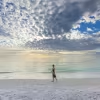
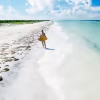
A pristine sugar sand beach; tranquil, shallow water that’s gin clear and a bewitching emerald hue; and a gradually sloping bottom make Santa Clara Access perfect for swimming and wading. Here, toddlers splash in the tide pools; ospreys ride the laminar breeze with outstretched wings; and beachgoers hike along the shoreline.
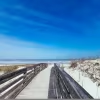
Set against towering dunes, you have convenient access to the beach via a ramp designed for easy navigation by wheelchairs or carts—or you can opt for a workout on the steep stairs on either side.
While the waves are usually gentle, waves, tides and offshore systems can sometimes make conditions rough.
Want to see for yourself? Here’s a video.
On or near the beach
Plant your beach umbrella and perfect your tan; cool off with a dip; or bring a kayak or SUP to paddle offshore. Refuel with a picnic or head a mile north to Bud and Alley’s, an unassuming seafood eatery esteemed for its fresh fare and glorious sunsets atop its rooftop deck.
Accessibility
Santa Clara Access offers ADA accessible restrooms; a boardwalk; and parking. Beach wheelchairs are available.
Facilities
Amenities at Santa Clara include water fountains; restrooms; outdoor showers; bike racks; a boardwalk; and benches. You can order beach chair and umbrella deliveries from the beach vendor here; just fill out the online form. With proper permitting, this beach is available for special events and beach bonfires.
Lifeguards
Lifeguards protect Santa Clara Access seasonally, from March 1 through Oct. 31, as well as limited roving coverage year-round.
Parking
Santa Clara Access offers free parking.
FREQUENTLY ASKED QUESTIONS ABOUT SEAGROVE BEACH
Q. Where is Seagrove Beach?
A. On Scenic Highway 30A in South Walton, Walton County, immediately east of Seaside and west of Watersound. It's one of the older communities on 30A, and it looks it in a good way: live oaks, low cottages and a lot of tree cover.
Panama City Beach is east along the coast and Destin is west. The nearest larger town for supplies is Santa Rosa Beach.
Q. Where do I get onto the beach?
A. The straightforward answer is the Seagrove Regional Beach Access at 3910 E. County Highway 30A, which opened in 2026 as Walton County's 10th regional access and sits right in the middle of the community. It has onsite parking including accessible spaces, a restroom building with rinse showers, bicycle parking and an accessible dune walkover.
You’ll find the older, established Santa Clara Regional Beach Access, also in Seagrove, at 3468 E. County Highway 30A. It is ADA accessible, has parking, restrooms, and lifeguards during peak season.
There are also numerous smaller neighborhood beach accesses along 30A through Seagrove, though most of those have little or no parking and are meant for people walking or cycling from nearby. The county lists them all on its beach and bay access locations page.
Q. Are there lifeguards?
A. At the regional access, seasonally. South Walton Fire District lifeguards staff a tower at the Seagrove Regional Beach Access daily from 10 a.m. to 6 p.m. through Oct. 31, as well as limited roving coverage year-round.
The neighborhood accesses are not guarded. If you're swimming away from the regional access, or outside those hours, you're doing it at your own risk.
Q. How do I read the beach warning flags?
A. South Walton flies the standard Florida beach warning flags at its regional accesses.
Green is low hazard, which is not the same as risk free. Yellow is medium hazard, with moderate surf or currents. Red is high hazard, with high surf or strong currents. Two red flags mean the water is closed to the public. Purple means marine pests such as jellyfish have been reported, and it can fly alongside any other color. The county explains the system on its beach access FAQ.
Entering the water on a double red day carries a fine.
Q. What is the water like?
A. The Gulf here tends to be calmer than Florida's Atlantic coast, over the white quartz sand this coast is known for. Tends to. Wind, tides and offshore systems change it, and rip currents form along this stretch regularly enough that the flag system exists for a reason.
If you're caught in a rip current, swim parallel to shore until the pull releases rather than fighting straight back in. Call 911 in an emergency. Shuffle your feet on the way in to warn away stingrays. Jellyfish arrive on some winds. If you're stung by a jellyfish, soak the area in hot water. Call 911 if the reaction is serious.
Q. What is Eastern Lake?
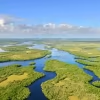
A. A coastal dune lake, and it's the most interesting natural feature in Seagrove. Coastal dune lakes are genuinely rare: they occur in only a handful of places worldwide, and Walton County has 15 named ones along this short stretch of coast.
They are shallow lakes, roughly five feet deep on average, sitting immediately behind the beach. When rainfall raises the lake's water level, it can break through the sand barrier and flow into the Gulf. The connection also allows saltwater from the Gulf to enter the lake, creating a changing mix of fresh and salt water until the opening closes again. Eastern Lake is good for paddling by kayak, canoe or paddleboard, and for birdwatching. Walton County explains the system on its coastal dune lakes page.
Q. What else is there to do?
A. Deer Lake State Park is a short drive east on 30A and gives you another coastal dune lake with a boardwalk over the dunes, quieter than most of the 30A beaches. Point Washington State Forest sits inland with hiking and off-road cycling trails.
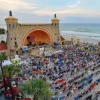
The paved trail alongside 30A runs the length of the corridor, and cycling it is the standard way to get between Seagrove, Seaside and the communities either side without driving. Seaside is a walk or short ride west if you want restaurants, shops and the amphitheater.
Q. Is the beach accessible?
A. The regional access is the best bet, with accessible parking and an accessible dune walkover onto the beach.
Beach wheelchairs designed for soft sand are free of charge in South Walton, available from lifeguard tower sites along the coast (Miramar Beach, Ed Walline, Santa Clara and Inlet Beach and Seagrove) between March 1 and Oct. 31, from 10:30 a.m. to 5:30 p.m. The number available is limited, so contact the South Walton Fire District at 850-267-1216 before you travel to confirm which tower has one free on the day. Details are on the county's accessibility page.
Q. Can I bring my dog to the beach?
A. Dogs on Walton County beaches require a permit, and permits are issued only to Walton County property owners and permanent residents. There is no version available to visitors.
For those who qualify, permits run from Aug. 1 to July 31, dogs must be leashed, rabies vaccination certification is required, and beach hours are restricted to 4 p.m. to 8 a.m. in spring and summer and 3 p.m. to 9 a.m. in fall and winter. The rules are on the county's beach permits page. Plan on the inland trails and pet-friendly patios instead.
The beach permit restrictions do not apply to qualifying service dogs, which are allowed on the beach without a permit.
Q. Is the beach in front of my rental public or private?
A. It depends on the parcel, and a lot of the beach along 30A is privately owned. Under a 2023 settlement, certain privately owned beaches allow public access up to 20 feet inland extending up to 20 feet landward from the wet/dry sand line, with conditions.
Those conditions are specific: sunbathing on those stretches is permitted only between 9 a.m. and 4 p.m., capacity is limited to one person per five linear feet, and you must reach the beach at a designated public access rather than crossing private property. Walking, running and entering the water are allowed. Using the regional access removes the ambiguity entirely, though this doesn’t establish public recreational rights along neighboring, privately owned beachfront.
Q. When is the best time to visit?
A. Late spring and early fall give you warm water, comfortable air and lifeguard coverage at the same time. Summer is hot and humid with afternoon thunderstorms that usually pass through and clear, and the Gulf is at its warmest then.
Winter is the trade-off. The air can be pleasant, but Gulf water along the Panhandle drops into the low 60s in January and February, too cold for most people to swim, and the lifeguards are off until spring. Come in winter for walking and cycling rather than swimming.
Q. What about sea turtles?
A. Nesting season in South Walton runs May 1 through Oct. 31. Permitted staff and volunteers with South Walton Turtle Watch survey the county's beaches daily through the season, identifying crawls and marking nests with stakes and flagging tape.
Leave nests and their markers alone. Fill in holes and knock down sandcastles before you go, because either can trap a hatchling, and take chairs, umbrellas and tents off the sand overnight.
On lighting, the rule is not simply that lights go off. Hatchlings orient by light reflected off the water, and white light from behind the beach draws them the wrong way. The standard is that artificial light must not be visible from the beach during the season, with shielded, turtle-friendly amber fixtures permitted. South Walton's sea turtle page covers the local rules, and sick, stranded or injured turtles go to the South Walton Turtle Watch hotline at 850-865-4503.


